Maltese workers’ wages continue to slide down the minimum wage rankings compared with their European counterparts
The higher wages Robert Abela spoke about in the last budget appear set to remain a dream for many Maltese workers, as the latest figures published by Eurofound paint a worrying picture of the wage situation for Maltese and Gozitan workers.

The higher wages Robert Abela spoke about in the last budget remain “your dream”; Maltese workers are feeling the pressure of the cost of living more than ever
The higher wages Robert Abela spoke about in the last budget appear set to remain a dream for many Maltese workers, as the latest figures published by Eurofound paint a worrying picture of the wage situation for Maltese and Gozitan workers.
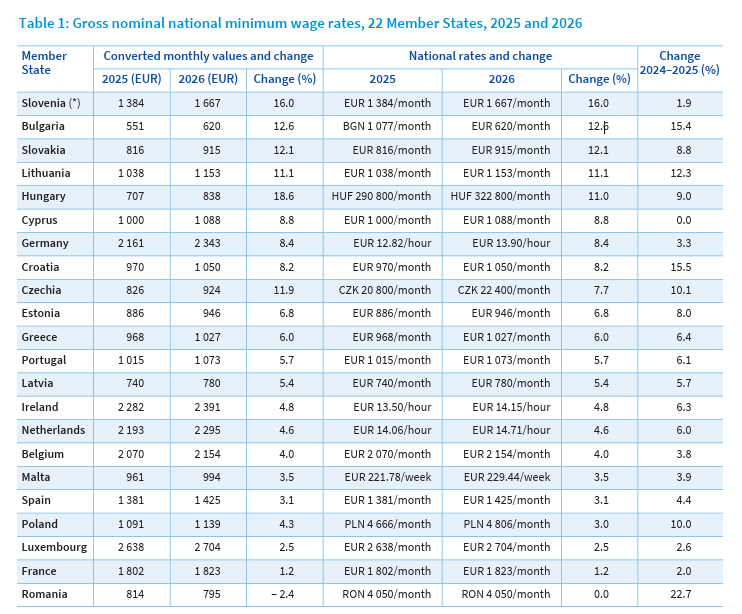
The report by this European Union agency, which works to improve working conditions and quality of life, shows that Malta has fallen from the eighth place in 2016 and 2021 to the 15th place in 2026 among EU Member States in terms of the national minimum wage.
In 10 years, seven countries that had lower wages than Malta have managed to overtake us and now have a higher minimum wage than ours. These are Slovenia, Lithuania, Poland, Cyprus, Portugal, Croatia and Greece. Some of these countries were well behind Malta only a few years ago but through more ambitious wage policies, they are advancing rapidly, while the Maltese workers continue to slide further down the rankings.
Malta’s minimum wage increased by just 3.5% between 2025 and 2026, to around €994 per month. Over the same period, other countries recorded significantly larger increases: Hungary almost 19%, Slovenia 16%, Bulgaria 13%, Slovakia just over 12% and Lithuania just over 11%.
Worse still, when this year’s increase in Malta’s minimum wage is compared with that of 2025, it emerges that the increase was smaller than the year before. Between 2024 and 2025, Malta’s minimum wage had risen by 3.9%, but between last year and this year it increased by just 3.5%. In total, this year’s increase in the national minimum wage amounted to around €7.50 per week, meaning less than €400 over a full year. Malta’s national minimum wage currently stands at €229 per week.
These figures from the European Foundation for the Improvement of Living and Working Conditions are clear confirmation that the economic growth repeatedly boasted about by the Labour Government is not translating into sufficient improvements in the wages of the lowest-paid workers. Over the years, the Government has failed to build an economy based on higher added value and greater productivity that can sustain better wages and a higher quality of life.
Although the minimum wage has increased slightly, it is not keeping pace with the real increases in the financial burdens faced by thousands of families, including higher prices for food, rent, property and other essential needs. At the same time, Malta’s minimum wage is advancing far more slowly than those of countries that once lagged behind us.
The picture becomes even more concerning in light of the warning just issued by Finance Minister Clyde Caruana in relation to energy subsidies. Last Sunday, Caruana admitted that the projected cost of the diesel subsidy alone had risen from €30 million to around €75 million in just three months, and warned that this could lead to cuts in government spending elsewhere – in other words, the Government will have to tighten its belt. This carries the implication that electoral promises made by the Labour Party to the public before the election may not be fulfilled.
This raises serious questions about the sustainability of the Government’s economic model and about who will ultimately pay the price for the poor decisions taken by the Government over the years.
Workers cannot continue to hear only about record economic growth on paper. While other countries are overtaking us, Maltese workers’ wages are worth increasingly less when compared with wages across Europe, while the rising cost of living continues to eat further into family incomes.
After years of growth based on population increases and the importation of low-paid workers, the result is clear: the economy has grown, but Maltese workers are not feeling that growth in their pay packets.
The Partit Nazzjonalista believes in an economy that measures its success not only through Gross Domestic Product (GDP) figures but by whether workers can live in dignity on their wages. Malta needs a change in its economic model: greater productivity, quality jobs, investment in skills and wages that rise according to the increase in wealth created.
Julian Borg
Shadow Minister for Infrastructure and Employment
Darren Carabott
Shadow Minister for the Economy, Technology and Strategic Projects
Adrian Delia
Shadow Minister for Finance
Annabella Cilia
Spokesperson for Employment
15.09.2026